
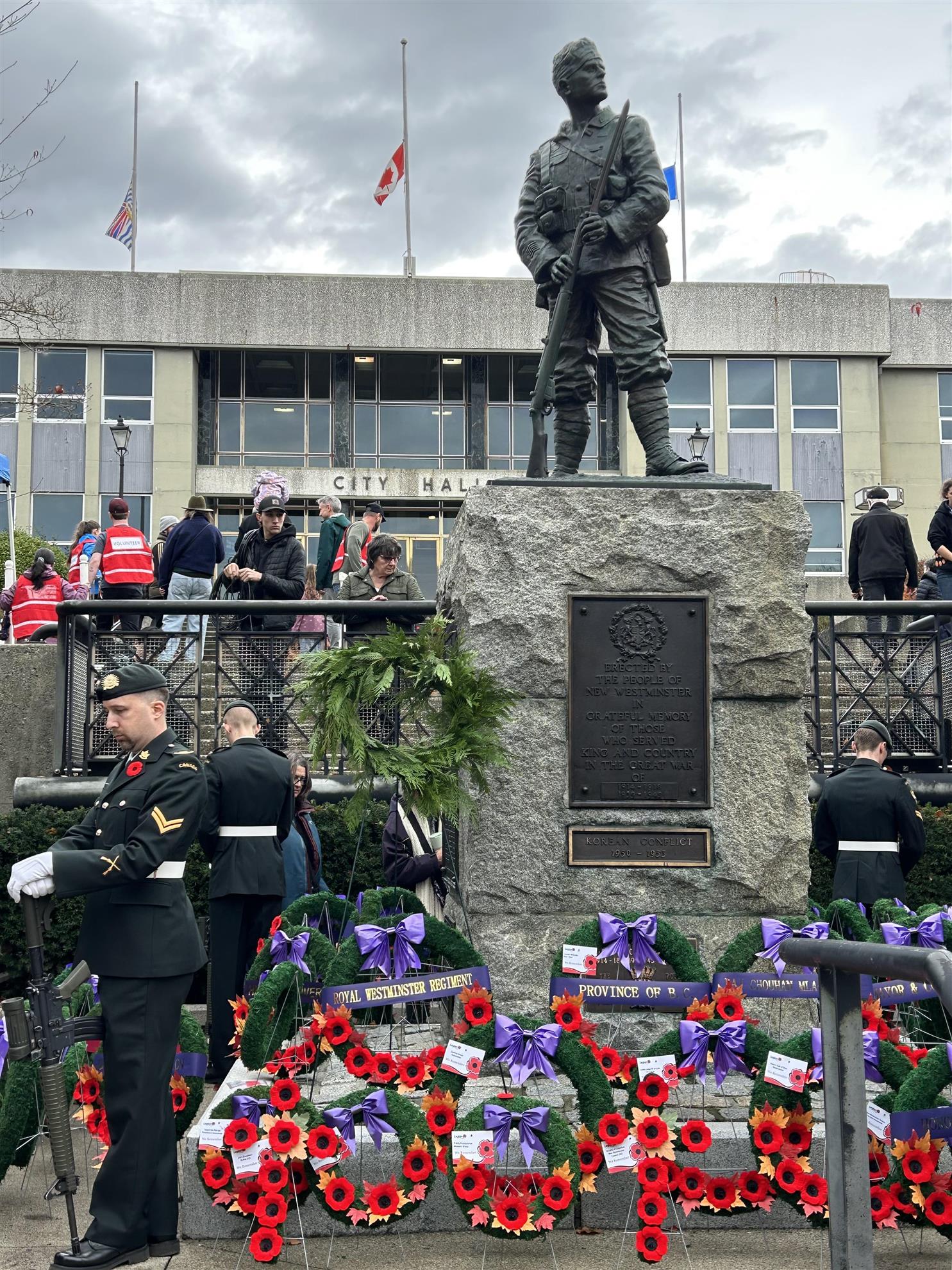
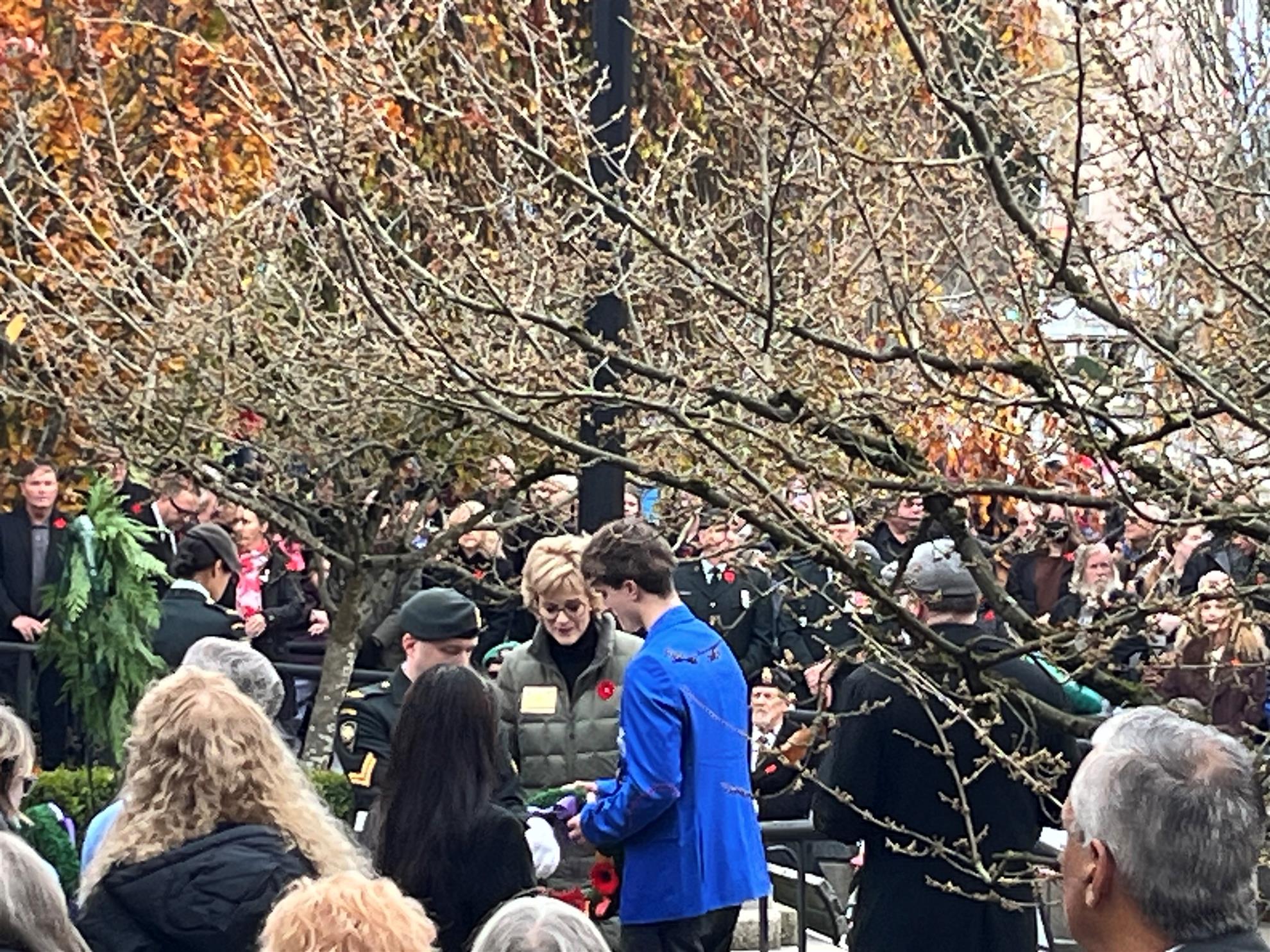
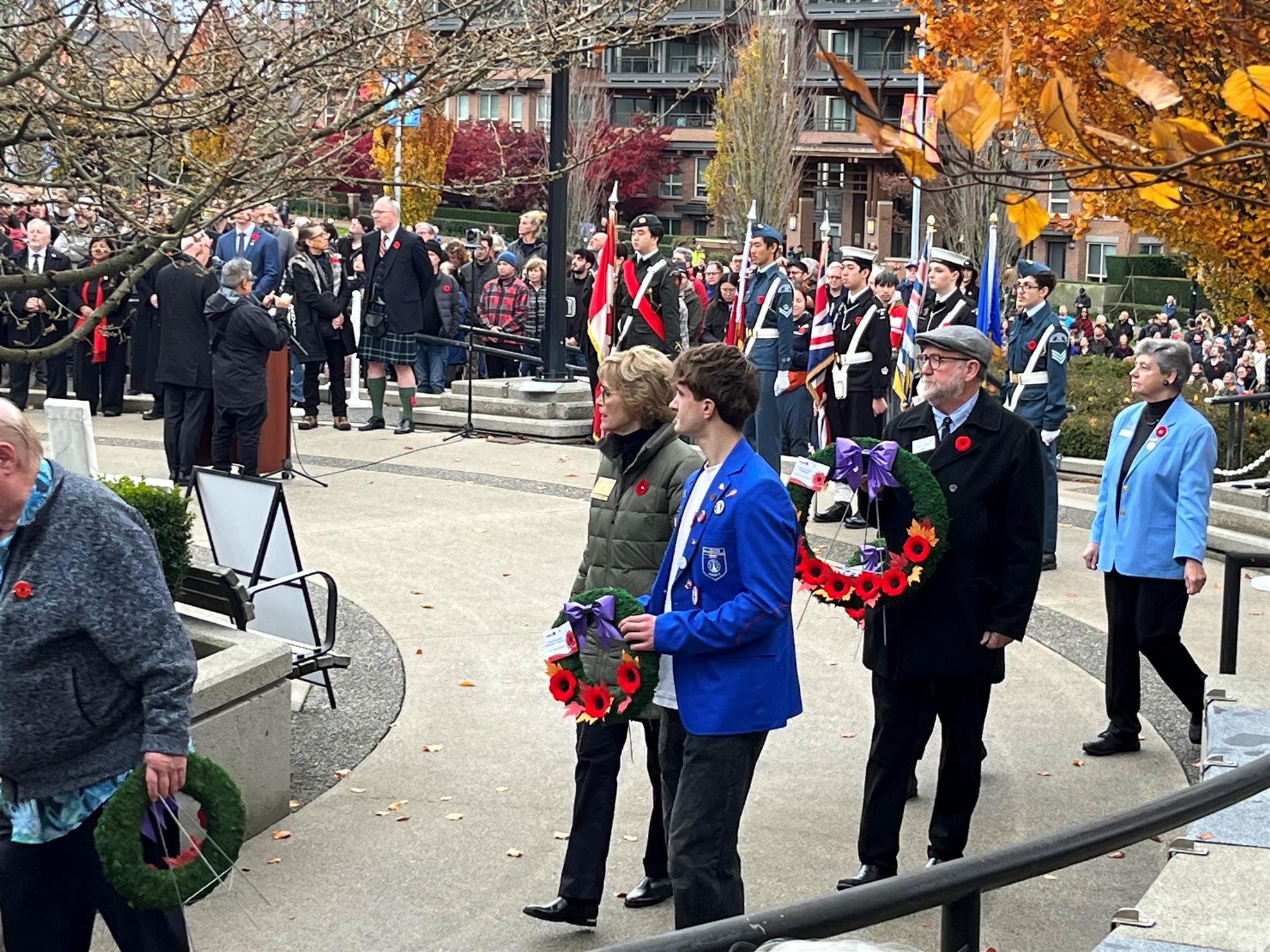
Remembrance Day at the City of New Westminster was offered in partnership with the New Westminster Royal Canadian Legion and the Royal Westminster Regiment. The event was also made possible thanks to the support of Royal Canadian Legion New Westminster Branch No. 2 volunteers, Last Door Recovery Centre, Girl Guides of Canada, and 12th New Westminster Scouts Group, and saw members from across the City and adjoining Cities to come together to recognise this important day. New Westminster Rotary Clubs International Exchange Student Antoine with Royal City Rotary Club President Sally Lore laid a wreath at the service. (for pictures, CLICK READ MORE)
Remembrance Day Poppy
The symbol of Remembrance Day is the red poppy, which grows on the First World War battlefields of Flanders (in Belgium) and northern France. As the artillery barrages began to churn the earth in late 1914, the fields of Flanders and northern France saw scores of red poppies appear.
The first person to use the poppy as a symbol of remembrance was American Moina Michael, who had been inspired by Lieutenant-Colonel John McCrae’s poem “In Flanders Fields.” Michael pledged in 1918 “always to wear a red poppy of Flanders Fields as a sign of remembrance and the emblem of ‘keeping the faith with all who died,’” referencing a line in the poem.
The first “poppy day” in Canada occurred on 11 November 1921. By 1922, lapel-worn poppies were manufactured and distributed by veterans in Canada. The Royal Canadian Legion, formed in 1925, has run the poppy fundraising campaign in Canada ever since.