WORLD POLIO DAY, 2022
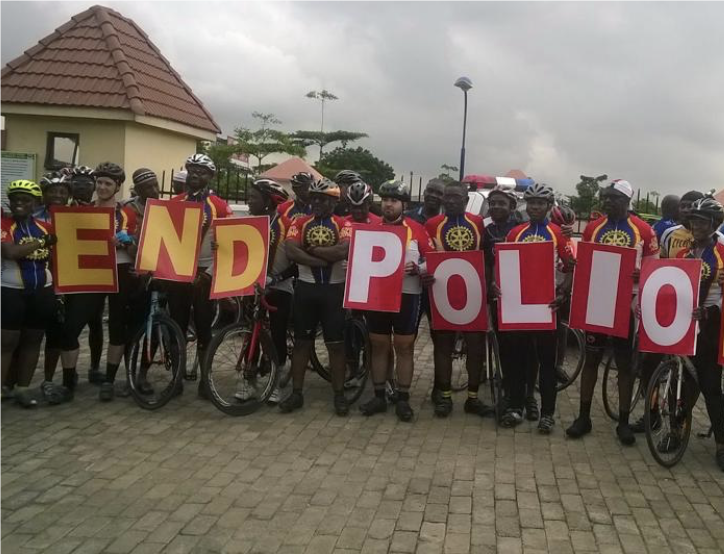
On Monday, October 3rd last, Rotarians of New Westminster attended the meeting at City Hall to receive a Proclamation by City Council of World Polio Day in New Westminster on October 24, 2022.
The Proclamation was presented as requested by the Rotary Club of New Westminster (which has been active in the New Westminster community since 1928), the Royal City Rotary Club (established 1993), the Rotaract Club of New Westminster, and the Interact Club of New Westminster Secondary School.
What is Rotary, you might ask? Rotary International is a humanitarian service organization which brings together business and professional leaders and others in order to provide community service, promote integrity, and advance goodwill, peace, and understanding in the world. Rotary Clubs have been active in their communities since 1905 when Paul Harris, a Chicago lawyer, organized a group of 3 businessmen to join him to form a service club. It is a non-political and non-religious organization. Currently, there are over 46,000 member clubs in over 200 countries worldwide, with a membership of 1.4 million individuals, known as Rotarians. Rotarians are active in many different fields, too many to mention here. What do Rotarians look like? The people you meet on the street. Your friends. Your co-workers. Your family members. And like you. They are committed to the ideals of Rotary: Service above Self. One of the many projects Rotary has spear-headed (though perhaps the greatest) is the eradication of the poliovirus from the world.
In the mid-1950s, polio was a highly infectious, devastating disease afflicting over 350,000 children each and every year. The virus attacks the nervous system and frequently results in death, or paralysis and deformity in those that survived. The impacts on children living in the developed world were terrible enough for the victims. Imagine what effect polio had on the opportunities for children in the developing world, where the consequences of any disadvantage were magnified many times. The opportunity to get an education. To get a job. To have a family.
Many years of research resulted in the development of the poliovirus vaccine in 1955 by Dr. Jonas Salk and his team of scientists. There was hope that the disease could be limited in the future. A major development to facilitate vaccination programs was the creation of an oral polio vaccine in 1959, making the vaccination process much easier and effective. Just 2 drops from an eye dropper administered orally. The number of polio cases plummeted in regions of the developed world where the vaccine was available. But much of the world did not have access to the vaccine, or the means to vaccinate their children.
This changed in 1979 when Rotary started a program to vaccinate all children in the Philippines. The progress in curtailing the disease there resulted in Rotary partnering with the World Health Organization, Centres for Disease Control, UNICEF and others (governments and non-governmental organizations) to create the Global Polio Eradication Initiative (GPEI), with a goal to immunize all children of the world and get rid of the disease forever. Rotary has been at the forefront of the Initiative. Rotarians have met or exceeded the expectations of the Initiative, either in financial contributions from personal funds or fundraising activities to the tune of $2.6 billion, in addition to countless volunteer hours. The GPEI has seen over 3 billion children vaccinated over the past 4 decades (now 400 million children annually), with the incidence of polio reduced by over 99.9% to date. It is estimated that 20 million children are able to walk today because they were vaccinated against polio. The cost to date of the Initiative is estimated at $12.5 billion, but with a savings in medical costs of $25 billion, in addition to the preservation of human capital and alleviation of suffering, which cannot be given a dollar value.
From 350,000 cases in 1985, the annual number of reported wild polio cases world-wide dropped to 140 in 2020, only 6 in 2021 but increased to 27 in 2022 to the end of September. These cases were located in “conflict zones” of Afghanistan and Pakistan where it is dangerous to operate, the populace is suspicious of Western medicine, and governments may not be as cooperative. It is encouraging that the Taliban, now back in power in Afghanistan, is supportive of the Initiative.
Imagine the challenges of immunizing all children in places like Africa, India, Southeast Asia, South and Central America. But these have all been certified “polio-free” by the World Health Organization in the past decade (test: requiring 3 years without a reported case of wild polio virus).
It should be noted that for many years an extremely rare number of cases may be a result of an infection of the vaccination itself, so-called “vaccine-derived poliovirus.” The vaccine consists of inactivated polio virus, which prompts the immune response without causing polio. As we have experienced with the Covid-19 pandemic, viruses have a nasty tendency to mutate, rendering the current vaccines to become ineffective, and actually result in paralytic polio. These numbers are insignificant when compared to the number of vaccinations given, like “collateral damage” in the war on the virus. A new, more genetically stable “novel oral polio vaccine 2” has been deployed. Hopefully, when the world has been completely polio-free for ten years, vaccinations would no longer be necessary, and polio will no longer threaten our children, like smallpox in years past.
The program to eradicate polio is a rigorous one. Currently, cases are found in Afghanistan (2), Pakistan (19) and Mozambique (6). But reports from New York and London (hitherto considered to be polio-free) of circulating virus in the sewage systems give cause for alarm, and emphasize the need for constant surveillance and vaccination programs throughout the globe. Possibly Covid-19 has interfered with the vaccination program for the past two years, affecting an estimated 26 million children who did not receive routine but vital immunizations. Rotary International has announced last week that in conjunction with the Gates Foundation it will make a further $150 million commitment annually to the polio program. Rotary is determined to see the finish line on this marathon effort. Rotarians of New Westminster and their friends are committed to pursuing the success of the GPEI.
From the latest Rotary District 5040 Polio report:
“The world currently has a unique opportunity to stop virus transmission for
good. Still, all parties, including donors and country governments, must
re-commit to polio eradication by fully supporting the Global Polio
Eradication Initiative (GPEI) 2022-2026 strategy. This focuses on adopting
an emergency posture while generating greater accountability and ownership
from country governments to eradicate wild polio and end variant poliovirus
(cVDPV) outbreaks.”
The contribution of Dr. Jonas Salk is not limited to developing the polio vaccine. He also made a significant contribution financially. When he developed the vaccine, he decided he would not apply for a patent for the vaccine, but instead he opted to forego the considerable wealth that would have accrued to him personally. He did this so the vaccine would be available and less expensive for the children of the world.
So the strategy for the Initiative at this stage is simple:
- Vaccination
- Surveillance
- Respond to outbreaks
We would encourage Rotarians and friends to continue to support the Initiative financially. Comparing the Initiative to a 110 metre hurdles race, we have put 9 hurdles behind us, let’s not falter on the 10th hurdle, just short of the finish line.

.png)